
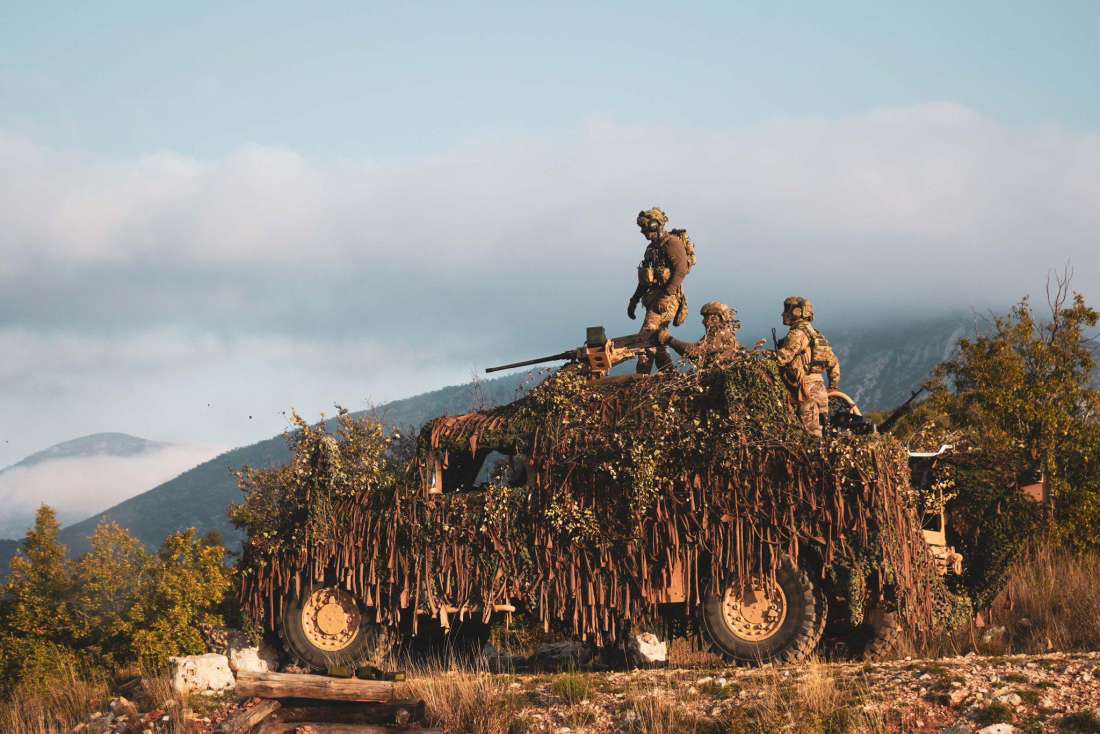
The early 2020s witnessed a dramatic and highly publicized retreat of French military forces across the Sahel region. One by one, Mali, Burkina Faso, and Niger—once the central pillars of France’s regional counterterrorism operations—severed military ties with Paris, expelled its forces, and formed the Alliance of Sahel States. This withdrawal marked the definitive end of Operation Barkhane and a historic blow to French influence in its former colonies. However, the narrative that France has entirely abandoned its military ambitions in Africa is misleading.
|
http://buycoffee.to/przekazwiedzy You’ll motivate me to work harder and create better content. Thank you! |
A quieter, more pragmatic realignment is currently unfolding. France is slowly returning to the continent's security theater, but this time, the focus has shifted south to the coastal states of the Gulf of Guinea, with the Republic of Benin emerging as a critical new anchor. The security situation in West Africa dictates this southern shift. The jihadist insurgency that has devastated the Sahel for over a decade is no longer confined to landlocked nations. Armed groups, notably those affiliated with Jama'at Nusrat al-Islam wal-Muslimin, have systematically pushed southward, exploiting porous borders and local grievances. Northern Benin has increasingly become a target, facing a rising number of militant attacks. To prevent the collapse of these relatively stable coastal nations, the Beninese government has sought external security assistance, creating a new avenue for French military engagement.
Unlike the heavy footprint of the past, the new French military posture in Benin is designed to be discreet and supportive rather than dominant. There are no massive permanent French military bases officially declared in Benin. Instead, Paris is providing critical surveillance, logistical support, intelligence sharing, and specialized training to the Beninese armed forces. French military instructors are actively working with local troops to enhance their tactical capabilities against asymmetric jihadist threats. This approach aims to empower local forces to take the lead in combat operations, a strategy designed to mitigate the anti-French sentiment that fueled the coups in the Sahel. Interestingly, France is not acting alone in this new theater. The shifting geopolitical sands have led to an unprecedented level of pragmatic cooperation with the United States in Benin. Following their own forced withdrawal from Niger, American forces have also adopted a "light footprint" strategy in coastal West Africa. High-ranking US delegations have frequented Benin to solidify security cooperation agreements. American troops are increasingly embedded within Beninese bases to assist with counter-terrorism operations, advising local forces without provoking domestic resistance. This convergence of French and American military interests highlights a shared Western imperative: stabilizing the Gulf of Guinea to prevent the Sahel's security vacuum from reaching the Atlantic Ocean.
The fundamental question remains as to why France has such a deep, vested interest in returning to assist these coastal African nations despite the recent diplomatic humiliations in the Sahel. The answer lies in a complex web of security, economic, and broader geopolitical calculations. Primarily, France recognizes that the spread of jihadist terrorism to the Gulf of Guinea poses a direct, long-term threat to European security. If states like Benin, Togo, or Ivory Coast were to fall into chaos, the resulting humanitarian crises, mass migration, and establishment of vast terrorist safe havens would directly impact the European continent. Containing the threat locally is viewed as a vital national security interest in Paris. Economically, the Gulf of Guinea is of paramount importance to France and Europe. It is a critical artery for global maritime trade, particularly for energy resources and raw materials. Ensuring the stability of the coastal states is essential for protecting these maritime routes from piracy and illicit smuggling operations. Operations such as the French naval mission Corymbe rely on secure, cooperative coastal states to maintain maritime domain awareness. Benin offers strategic access to this coastline, making it an indispensable partner for protecting European economic interests in the region.
Furthermore, France's military presence is a tool to maintain its status as a significant global power in an era of intense geopolitical competition. The vacuums left by Western powers in Mali, Burkina Faso, and Niger were rapidly filled by Russian mercenaries and Chinese economic influence. By fortifying its partnerships with coastal states like Benin, France is actively working to counterbalance the expanding influence of non-Western rivals in Africa. It is a signaling mechanism to allies and adversaries alike that Paris remains an active, capable, and committed player in global security architectures. In conclusion, France's military strategy in Africa has not ended; it has merely evolved. The heavy-handed interventions of the past have been replaced by a nuanced, intelligence-driven, and partner-led approach in the Gulf of Guinea. By training the army in Benin and cooperating quietly alongside American forces, France is drawing a new defensive line against regional instability. Whether this discreet strategy will succeed where previous massive deployments failed will depend entirely on the ability of local governments to address the root causes of the insurgency alongside the tactical military support provided by their Western partners.
SOURCES:
https://issafrica.org/iss-today/will-the-aes-unified-force-succeed-where-the-g5-sahel-failed
https://en.wikipedia.org/wiki/French_military_withdrawal_from_West_Africa_(2022%E2%80%932025)
https://www.unav.edu/web/global-affairs/the-presence-of-the-french-military-in-the-sahel-lasting-commitment-or-distant-fantasy
https://www.modernghana.com/news/1472894/french-troops-and-military-involvement-in-benin.html
https://www.kas.de/en/country-reports/detail/-/content/the-us-strategy-in-west-africa-under-trump
https://www.africansecurityanalysis.com/reports/strengthening-benin-france-military-cooperation-french-amphibious-assault-ship-pha-tonnerre-calls-at-cotonou
https://bj.usembassy.gov/military-affairs-and-security-cooperation/
 Polski (PL)
  English (United Kingdom)