Following the failure of weekend peace negotiations in Islamabad, the United States military, acting on direct orders from President Donald Trump, has started a comprehensive naval blockade of all maritime traffic entering and exiting Iranian ports.
|
http://buycoffee.to/przekazwiedzy You’ll motivate me to work harder and create better content. Thank you! |

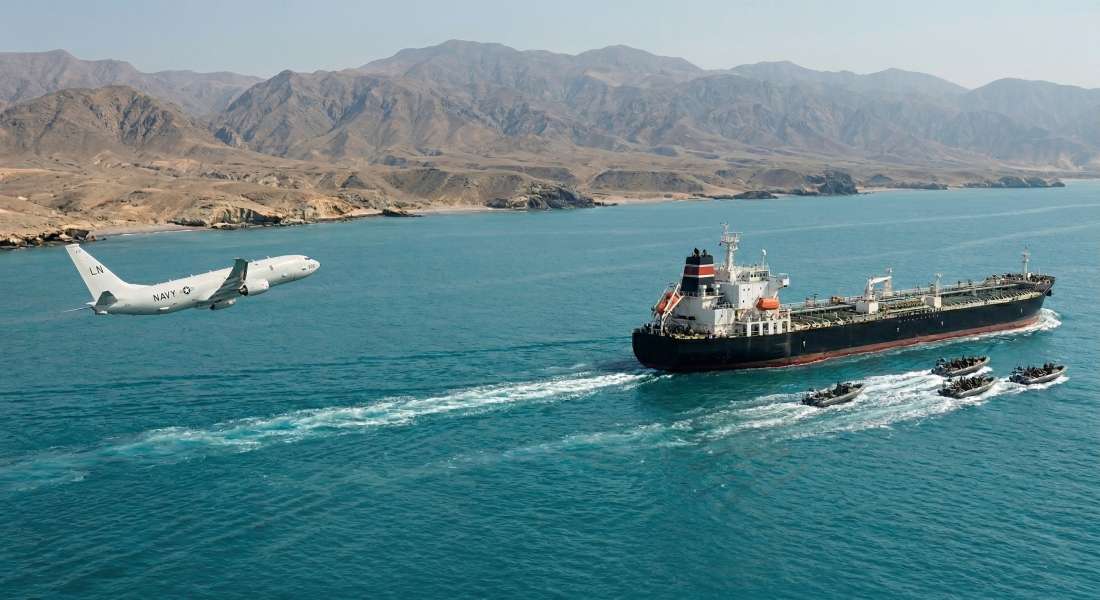
The operation, which officially began on Monday morning at 10:00 AM Eastern Time, marks a major escalation in the ongoing regional tensions. This move puts a fragile two-week ceasefire at serious risk. By restricting movement in one of the most critical energy transit routes in the world, the blockade carries heavy consequences for global trade, maritime law, and international diplomacy. At the center of this operation is a strong concentration of American naval power deployed in the Arabian Sea and the Gulf of Oman. According to available satellite imagery and defense reports, the United States has positioned an estimated eleven to fifteen warships in the immediate area to enforce the blockade. The core of this maritime group is the Nimitz-class aircraft carrier USS Abraham Lincoln, which is operating alongside its associated strike group. Additional forces in the broader region reportedly include the aircraft carrier USS Gerald R. Ford and multiple amphibious ready groups. These ships are tasked with creating a physical barrier to commercial traffic destined for or coming from the Islamic Republic of Iran. A very important aspect of this development is the unilateral nature of the United States operation. European allies within the North Atlantic Treaty Organization have officially declined to take part in the blockade. For instance, the Prime Minister of the United Kingdom publicly stated that his government would not support the blockade of the Strait of Hormuz. Instead, European leaders are advocating for a peaceful multinational mission to ensure freedom of navigation. Because of this, the United States Navy is undertaking this massive logistical and military effort entirely on its own. This highlights a clear difference in strategy between Washington and its traditional European partners when it comes to dealing with Iranian influence.
The operational details of the blockade, as explained by the United States Central Command, state that the effort is directed only at vessels interacting with Iranian ports and coastal areas. This includes all Iranian ports on the Arabian Gulf and the Gulf of Oman. United States military officials have emphasized that they will not stop the freedom of navigation for commercial vessels traveling through the Strait of Hormuz to or from non-Iranian ports. However, President Trump has explicitly expanded the rules of the operation. He declared that United States forces will search for and intercept any vessel in international waters that has paid a toll to the Iranian government for safe passage. In addition to these patrols, the United States military has started a demining operation to safely remove naval mines previously placed by Iranian forces, hoping to secure the shipping lanes for neutral maritime traffic. The immediate result of the blockade announcement has been a rapid disruption of regional maritime trade. Even before American ships began to physically stop vessels, the large scale of the naval deployment and the strict warnings from Washington worked as a highly effective early deterrent. Shipping data from various maritime tracking organizations shows that commercial fleets, especially oil tankers, have quickly changed their paths to avoid the contested waters. For example, several large cargo ships that originally planned to pass through the strait to load crude oil have turned around and dropped anchor safely in the Gulf of Oman. Other tankers linked to Iran were seen hurriedly leaving the Gulf just hours before the blockade started. This early evacuation shows the extreme caution taken by global shipping companies to avoid a potential military conflict.
In response to the American naval actions, the Iranian government and its military forces have issued severe warnings. The Islamic Revolutionary Guard Corps declared the United States naval blockade to be an act of piracy and a clear violation of international law. Iranian officials have warned that any military vessels attempting to approach the Strait of Hormuz to enforce the blockade will be treated as breaking the recent ceasefire. They promised a harsh and decisive response to any such moves. Furthermore, leaders in Tehran have stated that if their own maritime traffic is blocked, they will ensure that no other ports in the Gulf region remain safe. These statements show the very real danger of armed conflict in the narrow waters of the strait, where the close distance between opposing military forces leaves almost no room for mistakes. The Strait of Hormuz is a vital geographic passage, traditionally handling the movement of about twenty percent of the global oil supply. A lasting blockade, even if it is meant only to stop Iranian exports and imports, naturally increases the risks for all ships sailing in the area. Insurance costs for maritime shipping are expected to rise sharply, and the difficulties of changing supply routes will definitely affect the delivery of energy resources to global markets. The United States aims to use maximum economic pressure on Iran to force agreements regarding its nuclear program and regional actions. However, the secondary effects of this blockade on the world economy remain a major concern for international experts.
The long term success of this unilateral blockade is still uncertain. Throughout history, keeping a strict naval blockade requires huge amounts of resources, strong political support, and constant patrols at sea to stop smuggling. The United States Navy must now watch hundreds of vessels every day, trying to tell the difference between legal neutral trade and banned Iranian shipments. The outcome of the operation will depend not only on the physical strength of ships like the USS Abraham Lincoln but also on the careful diplomacy needed to handle reactions from both rivals and hesitant allies. As the situation develops, the international community is paying close attention, knowing that bringing more military forces into the Strait of Hormuz carries the constant threat of a wider regional war.
SOURCES:
https://www.dnaindia.com/explainer/report-us-navy-blockade-iran-ports-strait-of-hormuz-explained-3206261/amp
https://gcaptain.com/oil-tankers-steer-clear-of-hormuz-ahead-of-us-blockade/
https://english.alarabiya.net/News/middle-east/2026/04/13/us-military-to-begin-blockade-of-iran-ports-after-talks-fail-to-yield-a-deal
https://www.jpost.com/middle-east/iran-news/article-892771
https://taskandpurpose.com/news/military-iran-blockade/
https://www.navytimes.com/news/pentagon-congress/2026/04/13/us-blockade-of-iran-will-be-major-military-endeavor-experts-say/
https://www.cbsnews.com/live-updates/iran-war-us-iran-ports-blockade-strait-of-hormuz-trump/
 Polski (PL)
  English (United Kingdom)