
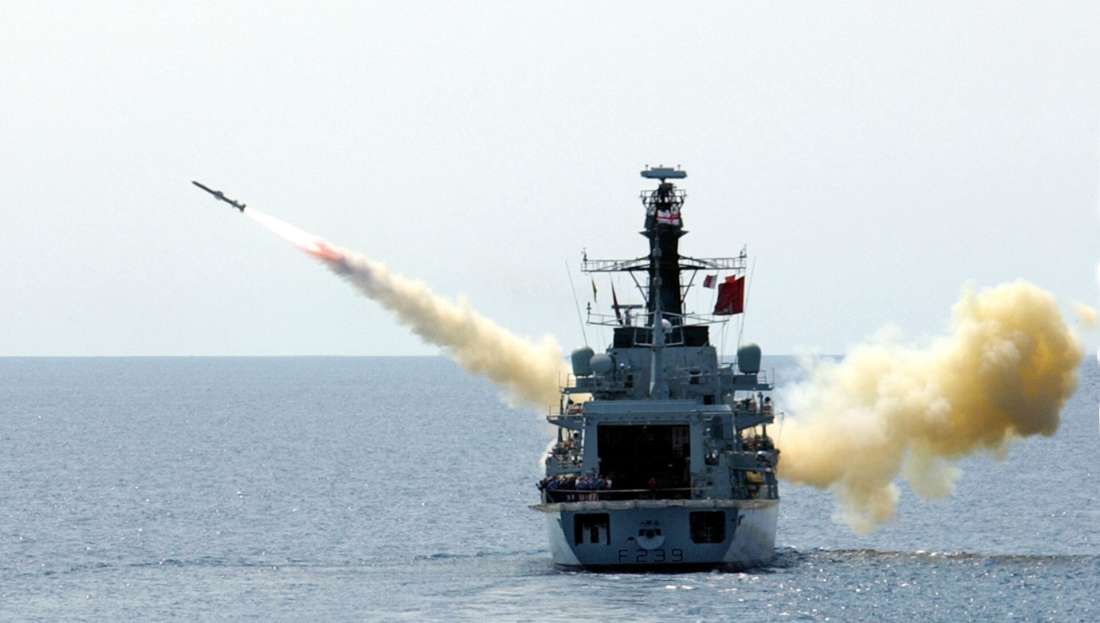
The strategic depths of the North Atlantic have once again become an arena for a high-stakes maritime standoff. In a recently disclosed operation, the United Kingdom and its allied partners successfully thwarted a covert Russian submarine mission near British waters. The incident highlights a growing shift in modern naval warfare, where the focus extends beyond surface dominance to the protection of vital, unseen networks lying on the ocean floor. The Royal Navy, relying on its battle-tested Type 23 frigates, demonstrated its readiness to counter incursions that threaten the critical undersea cables and pipelines serving as the backbone of global communication and energy grids.
|
http://buycoffee.to/przekazwiedzy You’ll motivate me to work harder and create better content. Thank you! |

The operation, which lasted for over a month and concluded in April 2026, involved a tense game of cat and mouse in the High North. British and allied forces tracked a concerted effort by the Russian Navy to conduct surveillance over critical infrastructure. United Kingdom Defence Secretary John Healey confirmed the details during a press conference, delivering a direct and robust message to Moscow, emphasizing that such maneuvers had been clearly observed and defeated. The Ministry of Defence revealed that the Russian deployment was not a routine transit but a calculated mission involving highly specialized underwater assets, designed to test the responsiveness and detection capabilities of Western naval powers while attempting to map vulnerabilities in international waters.
The Russian deployment consisted of three vessels, each playing a specific role in what the British government described as a complex diversionary tactic. At the forefront of this group was an Akula-class submarine. The Akula-class is a formidable nuclear-powered attack submarine, a legacy of advanced engineering that remains one of the most capable hunter-killer vessels in the Russian fleet. Known for its speed and stealth, the Akula was positioned in international waters to draw the attention of allied defense forces. However, British intelligence quickly identified this as a deliberate distraction. The true focus of the Russian operation involved two specialized spy submarines operated by the Main Directorate of Deep-Sea Research, widely known by its Russian acronym, GUGI. This highly secretive branch of the Russian Ministry of Defence is tasked with deep-ocean espionage, operating specialized submersibles capable of tapping into, manipulating, or potentially severing underwater communication cables that are essential for global security and commerce.
Refusing to be drawn solely by the Akula-class distraction, the Royal Navy initiated a comprehensive, around-the-clock monitoring operation. Leading the surface response was HMS St Albans, a Type 23 frigate specifically tailored for anti-submarine warfare. HMS St Albans did not act alone; she was supported by a Royal Fleet Auxiliary supply ship, RFA Tidespring, as well as Merlin anti-submarine helicopters and Royal Air Force P-8 Poseidon maritime patrol aircraft. Together, they deployed a vast array of sonobuoys, which are specialized acoustic sensors dropped into the ocean, to blanket the area and track the Russian vessels without interruption. The overt nature of the British response was intentional. By dropping sonar buoys and maintaining a continuous presence, the military made it abundantly clear that the Russian submarines were being watched every hour of every day. This effectively neutralized the secrecy of the mission, ultimately forcing the Russian flotilla to abandon their objectives and retreat to their home bases.
The successful deterrence of the Russian submarines rested heavily on the capabilities of the Type 23 frigate. Also known as the Duke-class, these warships were originally conceived during the latter stages of the Cold War with a single, primary objective: hunting Soviet submarines in the North Atlantic. Over the decades, they have evolved into highly versatile, multi-role platforms capable of undertaking a wide spectrum of maritime security operations across the globe. Their sophisticated suite of sensors, including highly sensitive bow-mounted and towed array sonars, allows them to detect the acoustic signatures of submerged vessels from miles away. This makes them uniquely suited for the kind of sustained tracking operations recently witnessed off the coast of Great Britain. Despite their age, continuous technological upgrades have ensured that they remain a formidable force and a critical component of the Royal Navy surface fleet.
A Type 23 frigate like HMS St Albans is heavily armed to deal with threats across all operational domains, whether they are beneath the waves, on the surface, or in the air. For its primary submarine-hunting role, the ship carries Sting Ray torpedoes designed to neutralize underwater targets. To defend against airborne threats, the frigate utilizes the Sea Ceptor air defense system. This cutting-edge missile network has the capability to protect an area of five hundred square miles, engaging multiple high-speed targets, including enemy aircraft and incoming anti-ship missiles, simultaneously. For surface engagements and shore bombardment, the ship boasts a powerful 4.5-inch Mark 8 naval gun. This weapon is capable of firing up to twenty-four highly explosive shells per minute, striking targets at distances between ten and eighteen miles (18-33km). Additionally, the frigate is armed with various small-caliber weapons, operated manually by the crew on the upper deck, to provide close-quarters defense against small, fast-moving surface craft.
While the Type 23 frigates have proven their worth time and time again in numerous international deployments, the Royal Navy is currently operating a shrinking fleet of these aging workhorses. According to current naval registers, Great Britain maintains an active roster of exactly seven Duke-class frigates. These vessels are HMS Iron Duke, HMS Kent, HMS Portland, HMS Richmond, HMS Somerset, HMS St Albans, and HMS Sutherland. These seven ships continue to bear the brunt of the Navy operational commitments, from shadowing Russian vessels in the North Sea to protecting international shipping lanes globally. However, the Duke-class is steadily approaching the end of its operational lifespan. The Ministry of Defence is currently in the process of replacing them with two entirely new classes of modern warships: the Type 26 City-class and the Type 31 Inspiration-class frigates. Until these new, advanced vessels are completely integrated into the fleet, the remaining seven Type 23s will continue to serve as the critical maritime shield for the United Kingdom.
The recent encounter involving the Akula-class and the secretive GUGI submarines serves as a stark reminder of the fragile nature of our modern, interconnected world. The undersea cables resting on the ocean floor carry the vast majority of global internet traffic and financial transactions, making them highly lucrative targets in any modern geopolitical conflict. The successful interception and deterrence by HMS St Albans and her accompanying allied forces underscores the absolute necessity of maintaining a robust, technologically advanced naval presence. As the international climate remains fraught with tension, the quiet, persistent vigilance of anti-submarine patrols will only grow in vital importance. These operations ensure that the critical arteries of global communication and energy remain secure from unseen, underwater threats, proving that while the nature of warfare may evolve, the importance of controlling the seas remains as absolute as ever.
SOURCES:
https://nz.news.yahoo.com/uk-says-russia-ran-submarine-130942469.html
 Polski (PL)
  English (United Kingdom)