
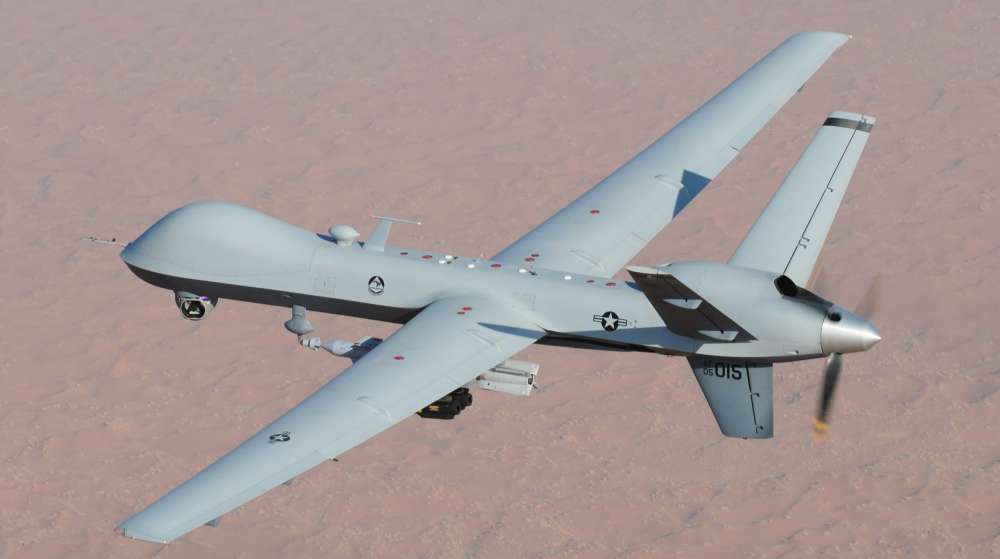
The air war over Iran has revealed a surprisingly heavy toll on the equipment of the United States military. Since the conflict began on February 28, the United States has lost an unprecedented number of its advanced surveillance and strike drones. According to reports confirmed by CBS News through United States officials, at least 16 MQ-9 Reaper drones have been destroyed in the region. However, Iranian sources and recent international reports claim the true number is 24 or more. The pace of these losses is increasing rapidly, with eight of these expensive aircraft falling from the sky since the beginning of April alone. This rapid rate of destruction is forcing military leaders to confront the high price of modern aerial warfare.
|
http://buycoffee.to/przekazwiedzy You’ll motivate me to work harder and create better content. Thank you! |

The financial impact of these losses is massive. Depending on the specific model and the equipment loaded onto it, a single MQ-9 Reaper drone costs approximately 32 million dollars. Based on the confirmed loss of 16 aircraft, the United States has lost over 500 million dollars in military hardware. If the Iranian claims of 24 destroyed drones are accurate, that figure climbs to nearly 770 million dollars. This represents hundreds of millions of dollars of advanced technology scattered across Iranian soil in just six weeks. This figure only covers the physical aircraft. It does not account for the expensive bombs, missiles, and highly classified sensor cameras that were destroyed alongside the drones. This level of financial drain is one of the most expensive episodes of drone losses in the history of the American military.
Manufactured by General Atomics, the Reaper is a large, remotely piloted aircraft operated by crews sitting safely at bases thousands of miles away from the battlefield. Its primary job is to gather intelligence, watch enemy troop movements, and conduct long-range reconnaissance missions. It is famously known as an "eye in the sky." Beyond just watching, the Reaper is a heavily armed machine. It can carry out precision strikes using laser-guided bombs and advanced missiles. For the last twenty years, this drone has been the central tool for American counterterrorism missions around the world, allowing commanders to watch a target for hours before deciding to strike.
Despite its impressive technology, the Reaper has a major weakness that is being exposed in the current conflict. The drone was originally designed to fly in uncontested airspace. This means it was built to operate in areas where the enemy forces on the ground do not have modern air defense systems, such as radar-guided rockets or fighter jets. The skies over Iran are heavily defended. The Iranian military operates a complex and modern network of anti-aircraft weapons. According to military reports, Iranian forces have successfully used advanced heat-seeking missiles and regional radar networks to detect and shoot down the American drones. Regions around central Iran, particularly near the city of Isfahan, have proven to be exceptionally dangerous for these slow-moving aircraft. The drones are simply not fast enough or stealthy enough to survive easily when modern missiles are fired at them.
The strategic reality of losing so many Reapers in such a short time is highly concerning for the war effort. These drones are frequently used to fly ahead of traditional fighter jets. They find hidden targets, track moving vehicles, and provide exact coordinates to commanders back at headquarters. When a Reaper is shot down, it creates a blind spot for the military. The sudden loss of eight drones in the first week of April suggests that Iranian air defense operators are learning the flight patterns and weaknesses of the American aircraft faster than the United States can adapt. If this trend continues, the military may have to rely on even more expensive, manned fighter jets to do the dangerous work of finding targets, which puts human pilots at severe risk.
The current situation highlights a difficult lesson for modern armies. While drones keep human pilots out of danger, they are not invincible. The loss of up to 24 Reapers proves that advanced technology can still be defeated by determined defenders using effective missiles. As the conflict continues, the United States will have to decide if the intelligence gathered by these drones is worth the staggering financial cost of replacing them at a rate of several per week.
SOURCES:
http://english.news.cn/20260410/5f12c610c7e54a5aa06d696820a310b9/c.html
https://www.cbsnews.com/news/american-fighter-jet-f15e-downed-over-iran/
https://english.nv.ua/nation/u-s-loses-16-mq-9-reaper-drones-in-iran-war-50596873.html
 Polski (PL)
  English (United Kingdom)