
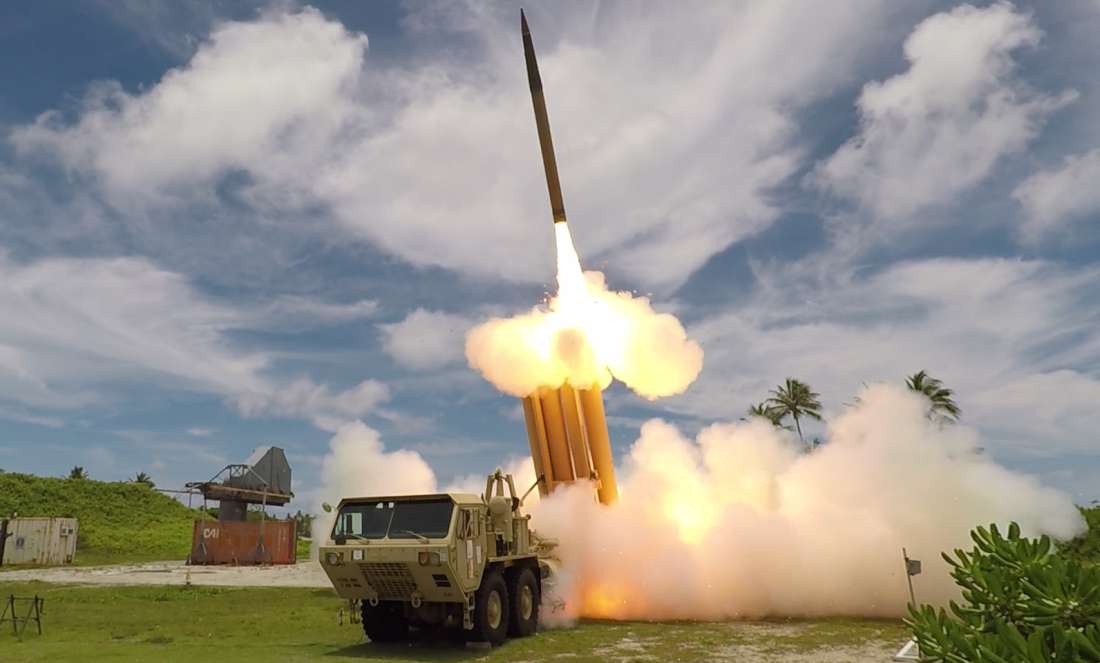
The United States Department of Defense has released its budget request for the 2027 fiscal year, revealing a massive shift in military spending. The core focus of this new financial plan is a dramatic increase in orders for missiles and defensive interceptors. This sudden demand for weapons is a direct response to recent military actions. Over the past year, the United States Navy has used a massive portion of its stockpiles during the intense war with Iran and the ongoing naval conflict with Houthi forces in the Red Sea. The government now faces the urgent task of replacing the weapons that were fired, while also preparing the military for future global challenges. This situation is placing historic pressure on the American defense industry to build complex weapons much faster than usual.
|
http://buycoffee.to/przekazwiedzy You’ll motivate me to work harder and create better content. Thank you! |

The most shocking detail in the 2027 budget is the plan to buy new Tomahawk cruise missiles. The Navy is asking for $3 billion to purchase 785 Tomahawks. This represents a staggering 1,200 percent increase compared to the 2026 budget, which only requested 58 of these missiles. The reason for this giant leap is a matter of basic math. Combat reports indicate that the United States military fired over 850 Tomahawks in just a few months after the war with Iran began in February 2026. Because it takes a long time to build these advanced weapons, defense experts warn that it will take several years just to replace what has already been used.
The budget also includes huge amounts of money for other vital weapons to secure the seas and the skies. The Pentagon plans to spend $4.33 billion to buy 540 Standard Missile 6 (SM-6) weapons. These missiles are absolutely critical for defending American ships against enemy planes and incoming attacks. Firing a $4.3 million SM-6 missile or a $4 million Patriot interceptor to shoot down a mass-produced, Iranian-designed loitering munition (drone) that costs roughly $20,000 is economically unsustainable in a protracted war. While buying more missiles restocks the shelves, it doesn't solve the core problem. The military is desperately looking for cheaper ways to kill cheap targets. In addition, the Air Force and Navy are asking for $804 million to acquire 494 AIM-120 AMRAAM missiles, which is a 370 percent increase from previous plans. These missiles are used by fighter jets to shoot down enemy aircraft in air-to-air combat. Finally, to ensure submarines are fully armed, the budget requests $571 million for 141 MK-48 torpedoes. All of these purchases reflect a clear strategy to load American forces with enough firepower to sustain long and difficult operations.
Beyond offensive weapons, the United States is also making massive changes to its air defense systems. The military heavily relies on Patriot missiles, specifically the highly advanced PAC-3 MSE version, to shoot down enemy ballistic missiles. Because these defense systems have proven highly effective, global demand is higher than ever. To meet this need, the manufacturer Lockheed Martin has signed a special agreement with the government to speed up production. The company will more than triple its manufacturing rate, jumping from about 600 Patriot missiles per year to 2,000 missiles per year by 2030. This expansion is designed to ensure the military and its allies never run out of defensive shields. Another major area of industrial growth is the Terminal High Altitude Area Defense, or THAAD, system. This system is built to destroy fast-moving missiles much higher in the sky. Similar to the Patriot system, THAAD stockpiles have been heavily depleted after being used to defend allies in the Middle East. To fix this dangerous shortage, the Pentagon and Lockheed Martin agreed to quadruple the production of THAAD interceptors. The defense factories are ordered to increase their output from 96 missiles per year to 400 missiles per year by 2027. This rapid acceleration is essential to quickly refill empty storage bunkers.
Achieving these aggressive production numbers will be very difficult. The companies that build these weapons are facing their biggest challenge in decades. They must quickly fix broken supply chains, construct new factory buildings, and hire thousands of skilled workers. The government is changing how it buys weapons to give these companies the guaranteed contracts they need to confidently invest in larger factories. This entire process shows that the military is changing its long-term strategy. The success of the 2027 budget will depend entirely on whether the national industrial base can actually deliver these complex systems on time.
SOURCES:
https://comptroller.defense.gov/Budget-Materials/
https://www.secnav.navy.mil/fmc/fmb/Pages/default.aspx
https://www.defense.gov/News/Contracts/
https://www.mda.mil/
https://nationalinterest.org/blog/buzz/us-navy-wants-8-billion-for-new-tomahawk-missiles-sa-040926
https://www.lockheedmartin.com/en-us/news/features/2026/Lockheed-Martin-and-the-U-S-Department-of-War-Expand-THAAD-Interceptor-Production.html
https://www.japantimes.co.jp/business/2026/01/07/companies/lockheed-triple-patriot-missiles/
https://smallwarsjournal.com/2026/03/27/magazine-depth-iran-missiles-stockpile-readiness/
 Polski (PL)
  English (United Kingdom)