The geopolitical landscape of Europe has experienced a dramatic shift in recent years, and at the center of this transformation is Germany. For decades following the Second World War, the German government maintained a cautious and restrained approach to military spending. The nation embraced a deeply rooted culture of military reluctance, preferring diplomacy and economic cooperation over armed strength. However, the harsh realities of modern conflict, particularly the ongoing war in Ukraine, have forced a profound reevaluation of this stance.
|
http://buycoffee.to/przekazwiedzy You’ll motivate me to work harder and create better content. Thank you! |

Today, Germany is remilitarizing on an unprecedented scale. This historic pivot, famously described by German leadership as a "Zeitenwende" or turning point, has rapidly propelled the country to the top ranks of global military powers. Currently, Germany boasts the fourth-largest defense budget in the world, trailing only the United States, China, and Russia. This is a monumental change that reshapes the balance of power within the North Atlantic Treaty Organization and across the European continent. According to recent data from the Stockholm International Peace Research Institute, Germany has significantly increased its military expenditures, surpassing major powers like the United Kingdom and India to secure its fourth-place position globally. The ambition does not stop at current budget increases. In a massive financial mobilization designed to rebuild and modernize its armed forces, the Bundeswehr, Germany intends to dedicate a staggering 750 billion US dollars to military expenditures over the next four years. This astronomical figure reflects a combination of regular defense budgets, special investment funds, and long-term procurement contracts. Such an investment guarantees that the German military will soon become the most formidable conventional force in Western Europe. It is a clear signal that the era of underfunded armies and neglected equipment is over.
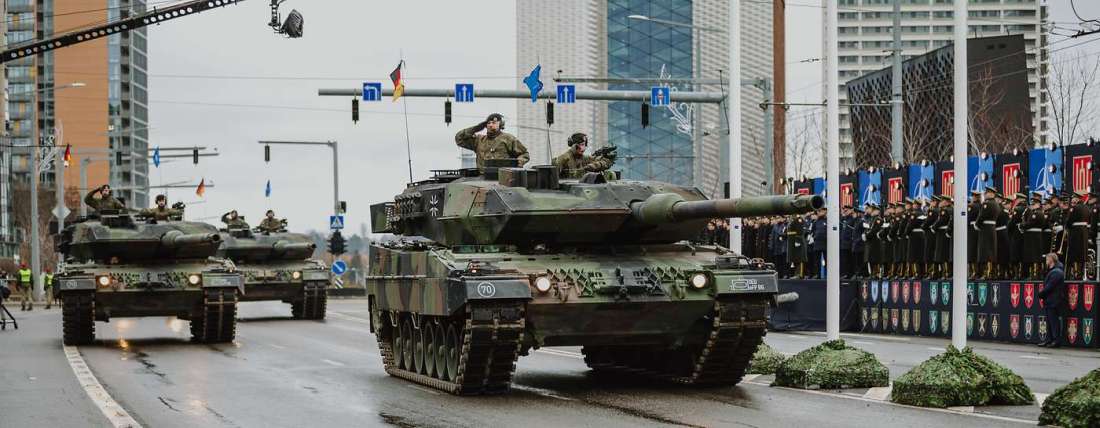
The decision to spend 750 billion dollars over four years is not merely about increasing troop numbers; it is fundamentally about technological modernization and readiness. For many years, the Bundeswehr was plagued by reports of faulty equipment, grounded aircraft, and a severe lack of ammunition. The new wave of funding is actively reversing these trends. A significant portion of the budget is being channeled into acquiring advanced weaponry. Germany is heavily investing in modern fighter jets, such as the American-made F-35, to maintain its role in nuclear sharing agreements and ensure air superiority. Additionally, the country is ordering new Leopard 2 main battle tanks, Patriot air defense systems, and advanced submarines. The focus is also on building massive stockpiles of artillery shells and other essential munitions, ensuring that the armed forces can sustain long-term operations if necessary. This modernization effort requires a robust industrial base, and defense contractors across Germany and Europe are rapidly expanding their production capacities to meet the demands of this massive rearmament program. This surge in military spending brings a unique set of challenges, particularly for the defense supply chain. Industry experts note that injecting hundreds of billions of dollars into the military sector requires manufacturing capabilities that have been dormant for decades. Factories must be built, workers must be trained, and raw materials must be secured. The entire European defense industry is currently experiencing a boom, driven largely by Germany's deep pockets and urgent timelines. Analysts warn that there could be bottlenecks in the production of electronic components, specialized metals, and advanced sensors. However, the German government is working closely with defense companies to secure these supply chains, often offering long-term contracts that provide the financial security needed for manufacturers to expand. The goal is to build a resilient military-industrial complex capable of supporting the Bundeswehr not just today, but for decades to come.
The international community has largely welcomed Germany's rearmament, viewing it as a necessary step for global security. For years, the United States urged its European allies to take a greater share of the financial burden within the military alliance. Washington has openly praised Berlin's commitment to massive defense spending, seeing it as a vital contribution to deterring potential aggression from Russia. Similarly, Eastern European nations, which are located closer to conflict zones, find reassurance in a militarily strong Germany. While history once made Germany's neighbors wary of its military might, the current geopolitical climate has turned that fear into a demand for leadership. A well-equipped and fully funded German military is now seen as the anchor of European defense, providing a protective shield for the entire region. Ultimately, this rapid and massive remilitarization marks the closing of one chapter of history and the beginning of another. Germany has accepted that economic power alone is not enough to ensure peace and stability in a turbulent world. By rising to become the nation with the fourth-largest defense budget and committing 750 billion dollars over the next four years, Germany is embracing its role as a leading security provider. The transformation of the Bundeswehr from an underfunded force into a modern military powerhouse will have lasting effects on global politics. It proves that democratic nations can and will adapt to new threats, making the necessary financial and political sacrifices to defend their values and secure their future.
SOURCES:
https://www.sipri.org/media/press-release/2025/unprecedented-rise-global-military-expenditure-european-and-middle-east-spending-surges
https://breakingdefense.com/2025/04/germany-surges-to-fourth-largest-global-military-spender-sipri/
https://en.wikipedia.org/wiki/List_of_countries_with_highest_military_expenditures
https://www.gov.uk/government/publications/international-defence-expenditure-2025/finance-and-economics-annual-statistical-bulletin-international-defence-2025
https://www.oliverwyman.com/our-expertise/insights/2025/jun/5-strategies-avoid-european-aerospace-defense-supply-chain-strain.html
https://ip-quarterly.com/en/we-cannot-expect-putin-wait-until-were-ready
 Polski (PL)
  English (United Kingdom)