
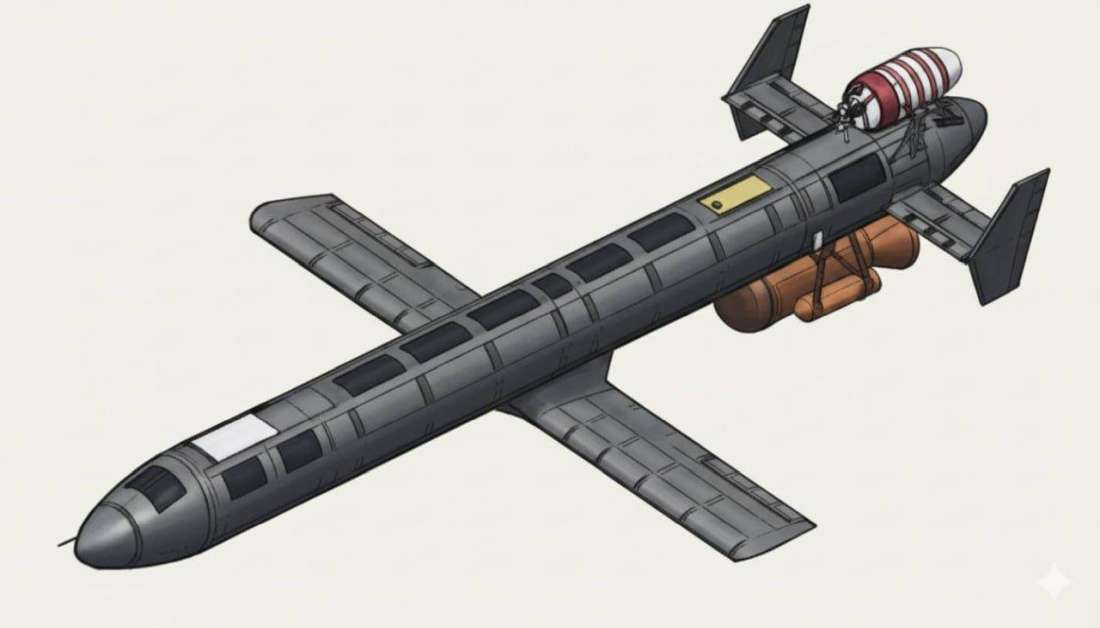
Recent reports circulating in military and defense circles regarding the deployment of a new Russian drone, designated as the Geran-5, have been confirmed as authentic. Verified by Ukrainian defense intelligence and international security analysts in early 2026, the Geran-5 represents a significant and dangerous evolution in long-range unmanned aerial systems.
|
http://buycoffee.to/przekazwiedzy You’ll motivate me to work harder and create better content. Thank you! |

This system is actively being used in operations against Ukraine, marking a clear shift in Moscow’s strategy toward utilizing high-speed, cost-effective missile-drones. The introduction of this weapon complicates an already strained air defense network in Ukraine, bringing cruise-missile capabilities at a fraction of the traditional cost. To understand the threat posed by the Geran-5, one must look closely at its technical characteristics, which depart fundamentally from earlier models in the Geran series. Previous iterations, such as the widely known Geran-2, which is a localized version of the Iranian Shahed-136, relied on a delta-wing design and slow piston engines. The Geran-5 abandons this approach entirely. It adopts an aerodynamic layout that closely resembles a traditional cruise missile rather than a loitering munition. The drone measures roughly six and a half meters in length and has a wingspan of just over three meters. With a maximum takeoff weight of eight hundred and fifty kilograms, it is a substantial piece of machinery. The aircraft carries a ninety-kilogram high-explosive warhead, designated as the BCh-90, which is capable of inflicting severe damage on infrastructure and fortified targets.
The most defining feature of the Geran-5 is its propulsion system. Instead of the loud, moped-like internal combustion engines of its predecessors, this new drone is equipped with a Chinese-manufactured Telefly TF-TJ2000A turbojet engine. This upgrade allows the Geran-5 to achieve cruising speeds between four hundred and fifty and six hundred kilometers per hour. At these speeds, the drone travels nearly three times faster than the original Geran-2. This drastically reduces the reaction time available to Ukrainian ground-based air defense operators and makes interception by mobile fire groups much more difficult. The drone boasts an operational flight range of approximately nine hundred and fifty kilometers, with a flight time of up to two hours and an ability to reach altitudes of six thousand meters. This range allows Russian forces to strike deep within Ukrainian territory while keeping their launch sites safely away from the front lines. The operational flexibility of the Geran-5 is another area of concern for military planners. The system is designed for dual launch methods. It can be launched from the ground using a solid-fuel rocket booster, much like traditional kamikaze drones. However, Russian forces have also developed the capability to launch the Geran-5 from the air, specifically using legacy Sukhoi Su-25 attack aircraft. By mounting two drones on a single aircraft, the launch point can be moved hundreds of kilometers closer to the target before the drone is even released. This air-launch method not only extends the practical strike range of the weapon but also adds an element of unpredictability, as the carrier aircraft can approach from various directions and altitudes, bypassing heavily defended frontier zones.
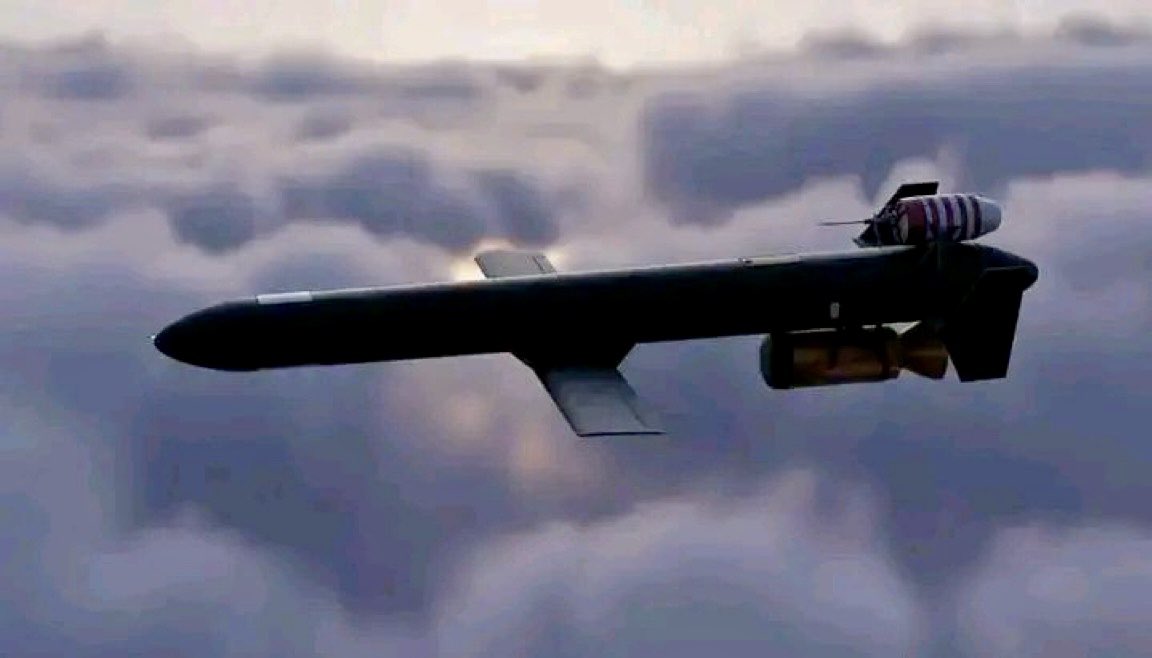
Despite heavy international sanctions aimed at crippling the Russian defense industry, physical examinations of downed Geran-5 drones in Ukraine have revealed a heavy reliance on Western and foreign microelectronics. Ukrainian military intelligence and independent research groups have dismantled recovered wreckage to find components originating from the United States, Germany, and China. The drone’s navigation and control systems rely on digital signal processors, operational amplifiers, and voltage regulators manufactured by American companies such as Texas Instruments, Monolithic Power Systems, and CTS Corporation. German components from Infineon Technologies have also been identified. Furthermore, the drone utilizes a network modem from the Chinese company Xingkai Tech. To ensure accurate targeting in heavily jammed electronic warfare environments, the Geran-5 employs the Kometa-M12 jammer-proof satellite navigation system. The presence of these modern, newly manufactured components indicates that Moscow has successfully established illicit supply chains and intermediary networks to bypass global trade restrictions. The exact origins of the Geran-5 design remain a subject of debate among military experts, though strong evidence points to foreign collaboration. While the drone shares the Geran naming convention with earlier Russian copies of Iranian systems, its physical appearance and technical parameters strongly resemble the Iranian Karrar unmanned aerial vehicle. Given the established history of military cooperation between Moscow and Tehran, many analysts believe the Geran-5 is either a direct derivative of the Karrar or heavily inspired by its design. However, the integration of Chinese engines and a completely different internal layout suggests that Russia has taken the base concept and heavily modified it to suit its specific production capabilities and tactical needs.
The combat debut of the Geran-5 in early 2026 signifies a dangerous new phase in the aerial war over Ukraine. By combining the speed and impact of a cruise missile with the mass-production potential of a one-way attack drone, Russia is attempting to overwhelm Ukrainian air defenses through sheer volume and velocity. While traditional cruise missiles are expensive and slow to produce, jet-powered drones like the Geran-5 can be manufactured in larger numbers. Ukrainian forces have successfully intercepted several of these new drones, proving that they are neither invisible nor invincible. However, the increased speed and varied launch platforms require the deployment of advanced, highly capable air defense systems, which are often in limited supply. As the conflict continues, the rapid technological evolution seen in weapons like the Geran-5 highlights the urgent need for continuous adaptation in the realm of global defense.
SOURCES:
https://www.iiss.org/online-analysis/missile-dialogue-initiative/2026/01/russias-new-jet-powered-gerans/
https://militarnyi.com/en/news/study-finds-russian-geran-5-drone-relies-on-american-and-german-components/
https://war-sanctions.gur.gov.ua/en/page-geran-5
https://defencesecurityasia.com/en/russia-geran-5-jet-drone-breaking-nato-air-defences-patriot-missiles/
https://en.wikipedia.org/wiki/Shahed_drones
https://militarnyi.com/en/news/russia-uses-new-geran-5-kamikaze-drone-against-ukraine-for-the-first-time/
https://gur.gov.ua/content/voroh-upershe-zastosuvav-udarnyi-bpla-yeran5-detali-novoi-rozrobky-bude-opryliudneno-na-portali-warsanctions.html
 Polski (PL)
  English (United Kingdom)