
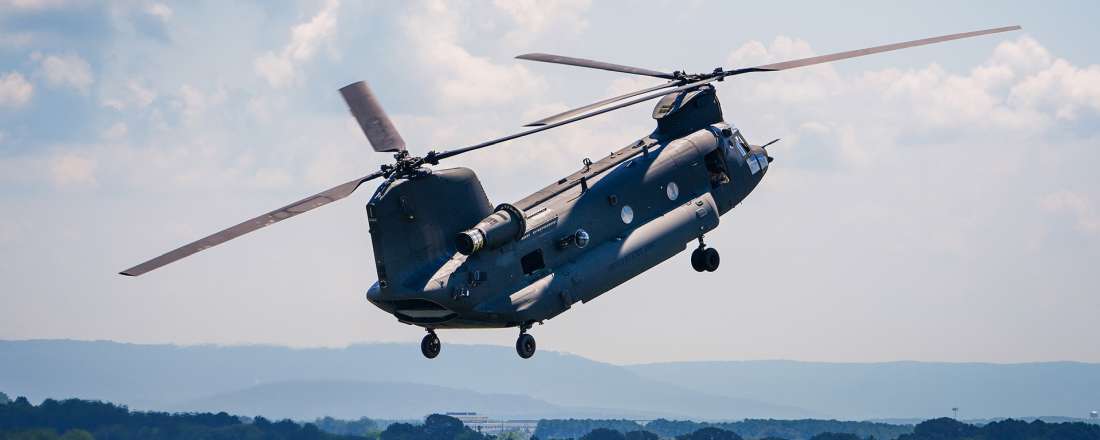
Boeing has officially initiated the production phase for the first of sixty CH-47F Block II Chinook heavy-lift helicopters destined for the German Armed Forces, commonly known as the Bundeswehr. This significant industrial and military milestone represents a substantial leap forward in the ongoing modernization of Germany's aerial transport and logistical capabilities.
|
http://buycoffee.to/przekazwiedzy You’ll motivate me to work harder and create better content. Thank you! |

The decision to procure these advanced rotorcraft comes as part of a broader, strategic effort by the German government to revitalize its national defense infrastructure in response to evolving security dynamics across the European continent. For decades, the German Air Force has relied heavily on its aging fleet of Sikorsky CH-53G Sea Stallion helicopters to perform heavy-lift duties. However, as these legacy aircraft approach the end of their operational service life, the need for a modern, reliable, and highly capable replacement became undeniable. The introduction of the new Chinooks will eventually form the absolute backbone of Germany's military air mobility. By selecting the CH-47F Block II, Germany is not only upgrading its own logistical capacity but also aligning its military hardware with that of numerous NATO allies. This alignment is highly beneficial, as it guarantees seamless interoperability during joint military missions, international humanitarian efforts, and rapid disaster relief operations where coordination with allied nations is essential.
The manufacturing and procurement of these sixty heavy-lift helicopters are the direct result of a carefully structured Foreign Military Sales agreement between the Federal Republic of Germany and the United States government. In this arrangement, the United States Department of Defense acts as the contracting authority on behalf of Germany, ensuring that the acquisition meets strict regulatory and performance standards. The financial and contractual details of this program are extensive and reflect the immense scale of the modernization effort. In the latter stages of the year twenty-twenty-five, specifically late October, an initial production contract valued at approximately eight hundred seventy-six million US dollars was officially awarded to Boeing by the United States Army Contracting Command at Redstone Arsenal. This primary contract serves to fund the direct manufacturing of the helicopter airframes. Shortly thereafter, in January twenty-twenty-six, a secondary and equally crucial contract worth one hundred nineteen million US dollars was finalized. This subsequent agreement focuses on the production of essential training and maintenance equipment, as well as the provision of comprehensive personnel training services. Ensuring that German pilots, mechanics, and ground support crews are fully prepared to operate and maintain these complex machines from day one is a critical priority. Importantly, the entire procurement initiative is fully funded by the German government and is part of a massive, overarching financial package estimated at nearly six point nine eight billion euros. This comprehensive budget covers not merely the physical aircraft, but also an extensive array of spare parts, long-term performance-based logistical support, and necessary ground infrastructure. According to the agreed timeline, deliveries of the CH-47F Block II helicopters to the German Air Force are scheduled to commence in twenty-twenty-seven and are expected to be fully completed by the end of October twenty-thirty-five.
Originally developed by Vertol and later manufactured by Boeing Defense, Space and Security, the Chinook is a heavy-lift, tandem-rotor helicopter that has seen continuous improvement since its inception in the mid-twentieth century. The defining feature of the aircraft is its tandem-rotor configuration, which utilizes two large horizontal rotors placed at opposite ends of the fuselage. Unlike traditional single-rotor helicopters that require a vertical tail rotor to counteract rotational spin, the Chinook's tandem design allows all the power generated by its engines to be dedicated entirely to vertical lift and forward thrust. This unique aerodynamic setup grants the helicopter remarkable stability and superior control, particularly when flying in adverse weather conditions, high-wind environments, or elevated mountainous terrains. The aircraft is powered by two highly capable turboshaft engines mounted on each side of the rear pylon. These engines enable the Chinook to operate effectively at extreme altitudes, capable of reaching up to twenty thousand feet, a crucial advantage for navigating over tall mountain ranges or operating in high-altitude deployment zones. Furthermore, the absence of a tail rotor means that the rear loading ramp can be accessed safely and without obstruction, allowing ground vehicles and personnel to approach the helicopter from the back even while the engines are running.
The specific Block II variant chosen by the Bundeswehr represents the absolute pinnacle of modern rotorcraft engineering, featuring numerous critical enhancements over previous models. One of the most significant improvements is the introduction of a substantially strengthened airframe structure, which increases the overall durability and lifespan of the machine. The Block II also incorporates redesigned fuel tanks that are lighter yet hold a greater volume of fuel, thereby significantly extending the operational range of the aircraft without sacrificing payload capacity. Additionally, an improved drivetrain transfers power far more efficiently from the engines to the advanced composite rotor blades. Inside the cockpit, the helicopter is equipped with a fully digital, open avionics architecture and an advanced flight control system. This modern interface drastically reduces the cognitive workload on the pilots, automating many routine flight stabilization tasks and allowing the crew to focus their attention entirely on mission objectives and situational awareness. The Chinook is universally renowned for its vast cargo-carrying capabilities. It is designed to transport mass cargo, military vehicles, and a large number of fully equipped troops either internally within its spacious cabin or externally. For external transport, the helicopter features three ventral cargo hooks located underneath the fuselage, enabling it to securely carry heavy underslung loads such as artillery pieces, supply crates, or even light vehicles. This versatility makes the CH-47F Block II uniquely suited for a wide spectrum of missions, ranging from tactical troop infiltration and special operations to large-scale humanitarian aid delivery in areas lacking functional airfields.
While the United States Army remains the primary and largest operator of the Chinook, the helicopter's proven reliability and unmatched heavy-lift performance have made it a highly sought-after asset globally. By acquiring the CH-47F Block II, Germany is officially joining an expansive and well-established international community of operators. Currently, twenty-two different countries field various iterations of the Chinook. The United Kingdom's Royal Air Force stands out as the second-largest operator in the world, having utilized the helicopter extensively in numerous overseas deployments and domestic emergency responses. Other prominent NATO and allied nations operating the Chinook include Canada, Australia, the Netherlands, Italy, Spain, and Greece. Beyond the borders of Europe and North America, the Chinook plays a vital logistical role in the armed forces of Japan, South Korea, India, Egypt, and the United Arab Emirates. This widespread global footprint is exceptionally advantageous for Germany from a strategic standpoint. By operating a standardized platform that is shared by so many international partners, the Bundeswehr will directly benefit from a robust and mature global supply chain for spare parts. Furthermore, operating the same equipment as allied nations facilitates shared tactical doctrines, simplifies the planning of joint military exercises, and drastically improves the efficiency of multinational coalitions during both combat operations and peacekeeping missions.
The commencement of production for Germany's CH-47F Block II fleet signifies much more than a mere industrial achievement; it is a profound enhancement of European defense and logistical capabilities. As these sixty heavy-lift helicopters gradually roll off the assembly lines and integrate into the German Armed Forces over the coming decade, they will dramatically boost the nation's expeditionary readiness and rapid response capacity. The transition from the venerable but outdated CH-53G fleet to the state-of-the-art Chinook Block II underscores a clear commitment by the German government to maintaining a modern, versatile, and highly capable military force equipped to handle the challenges of the twenty-first century. With its unmatched lifting power, advanced digital technology, and a proven operational track record shared by twenty-two nations worldwide, the Chinook will undoubtedly serve as a critical workhorse for Germany. It stands ready to transport vital supplies, assist in emergency relief efforts, and project stability wherever it is deployed for decades to come.
SOURCES:
https://www.boeing.com/defense/military-rotorcraft/h-47-chinook
https://en.wikipedia.org/wiki/Boeing_CH-47_Chinook
https://www.scramble.nl/military-news/boeing-started-production-of-germanys-ch-47f-chinook-block-ii-fleet
https://defensehere.com/en/boeing-secures-second-contract-for-germanys-ch-47f-chinook-block-ii-program
https://defence-blog.com/boeing-to-build-60-ch-47f-helicopters-for-germany
https://aerospace.honeywell.com/us/en/about-us/blogs/33-things-you-probably-do-not-know-about-chinook-ch47
https://www.helis.com/database/model/CH-47-Chinook/org
 Polski (PL)
  English (United Kingdom)