
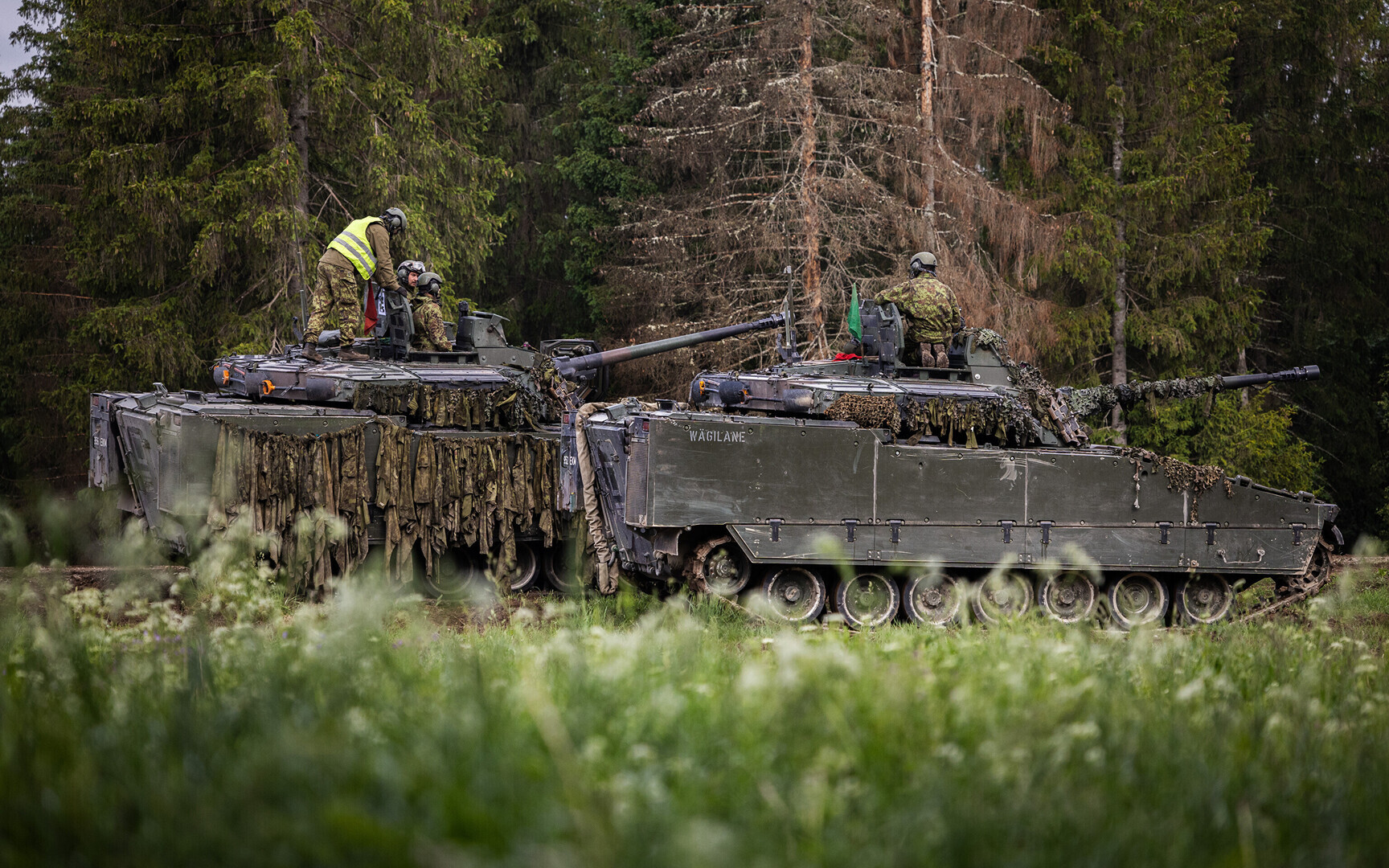
The nature of modern warfare is changing rapidly, and European nations are taking careful notes. In a significant shift in its military strategy, the government of Estonia has announced the suspension of a major procurement program intended to acquire new infantry fighting vehicles.
|
http://buycoffee.to/przekazwiedzy You’ll motivate me to work harder and create better content. Thank you! |

The program, which carried a price tag of five hundred million euros, will be halted. Instead, the Baltic nation plans to redirect these substantial funds toward the development and acquisition of air defense systems, drones, and countermeasures against unmanned aerial vehicles. This decision marks a clear pivot from traditional heavy ground armor toward more modern, technology-driven defense mechanisms. Estonian Defense Minister Hanno Pevkur confirmed the strategy shift, emphasizing that the decision was heavily influenced by the ongoing conflict in Ukraine. According to Pevkur, the Estonian military is constantly monitoring the battlefield dynamics in Eastern Europe and adapting its own plans accordingly. He noted that the lessons learned from Ukraine, combined with the current conditions of the global defense market and direct advice from the Commander of the Defense Forces, made the change necessary. Pevkur highlighted that the role of heavy equipment on the modern battlefield is visibly shrinking. In its place, the need for heightened situational awareness, robust air defense, and advanced unmanned systems is growing exponentially.
Originally, the newly planned combat vehicles were expected to be delivered to the Estonian Defense Forces between the years 2029 and 2030. With the cancellation of this procurement, the military faced a crucial question regarding its current ground capabilities. To maintain its readiness without spending half a billion euros on new armor, Estonia has decided to extend the operational life of its existing fleet of CV90 infantry fighting vehicles. The defense ministry plans to modernize these current machines, ensuring they remain in service for at least another ten years. While this life extension program will still require a financial investment, officials have stressed that it remains far more affordable than a complete replacement of the fleet. This practical compromise allows the military to retain necessary ground transport and firepower while freeing up the main budget for more pressing technological needs.
The redirected five hundred million euros will now flow into creating a more agile and aware defense force. Funding will be funneled into the eyes and ears of the military, specifically targeting the capability to detect and neutralize low-flying threats. The war in Ukraine has demonstrated that cheap, mass-produced drones can easily disable or destroy extremely expensive traditional tanks and armored carriers. Furthermore, the threat is not just theoretical for Estonia. Recent events have proven the necessity of strong local airspace monitoring. Just prior to this decision, instances of unknown drones entering Estonian airspace were recorded, including one that crashed near a power plant in Narva and another in a rural field in Tartu County. These incidents served as a stark reminder that unmanned aerial threats are already crossing borders and that robust peacetime monitoring is essential for national security.
This strategic reallocation of funds aligns with the broader vision of the Estonian government. Prime Minister Kristen Michal recently noted that the country is working to build a multi-layered air defense network over the coming years. Hundreds of millions of euros are being planned for defense investments specifically aimed at drone capabilities. A significant portion of this budget will go toward surveillance equipment and countermeasures that can safely bring down hostile drones, while another portion will be dedicated to developing Estonia's own offensive unmanned systems. The government is also working to update its legal framework to allow police and military personnel to better monitor and intercept drones even during peacetime, especially near critical infrastructure.
Ultimately, Estonia's decision reflects a highly pragmatic approach to national security. By canceling the expensive vehicle purchase, the country is avoiding the trap of preparing for the wars of the past. Instead, it is looking directly at the present reality of combat, where control of the sky and the electromagnetic spectrum often dictates the ultimate outcome on the ground. Through the modernization of its existing armored vehicles and a massive new investment in drone and anti-drone technology, Estonia aims to build a defense force that is highly mobile, technologically advanced, and well-prepared for the actual threats of the twenty-first century.
SOURCES:
https://news.err.ee/1609991037/estonia-halts-500-million-combat-vehicle-procurement-to-fund-air-defense
https://united24media.com/latest-news/estonia-redirects-eur500m-from-combat-vehicles-to-air-defense-and-drones-17783
https://caliber.az/en/post/estonia-shifts-spending-from-armoured-vehicles-to-drones-air-defence
https://news.inbox.eu/1503pzo-after-the-attack-of-ukrainian-drones-estonia-changed-its-mind-about-spending-half-a-billion-euros-on-combat-vehicles?language=ar
https://news.err.ee/1609981791/prime-minister-estonia-close-to-achieving-multilayer-air-defense
https://united24media.com/latest-news/estonia-prepares-strategic-plan-for-30-day-autonomy-and-deep-strikes-into-enemy-territory-17792
 Polski (PL)
  English (United Kingdom)