
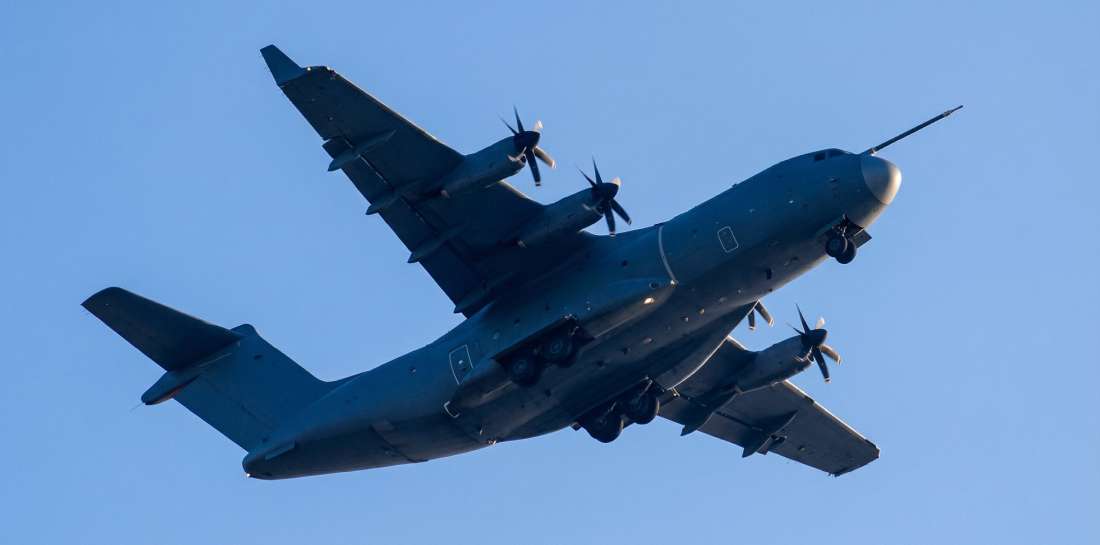
The aviation world is currently paying close attention to a new development coming from the Chinese military aerospace industry. Recently, military magazines and defense news outlets have highlighted strong claims from China regarding its next-generation medium-lift transport aircraft, known as the Y-30. Chinese officials and state-linked media state that this new plane will challenge and even surpass the famous United States C-130J Super Hercules in almost all important performance areas.
|
http://buycoffee.to/przekazwiedzy You’ll motivate me to work harder and create better content. Thank you! |
For decades, the C-130 family has been the global standard for tactical airlift operations, trusted by air forces around the world for its absolute reliability and toughness. The introduction of the Y-30 signals a direct attempt by Beijing to build an aircraft that not only matches this high standard but exceeds it in cargo capacity and modern technology. This bold claim has sparked intense discussions among military observers globally, as creating a completely new aircraft to dethrone such a legendary plane is an incredibly difficult task. For a long time, the Chinese military has relied heavily on older medium transport models like the Y-8 and Y-9. These planes are originally based on much older Soviet designs and currently suffer from aging airframes and limited flight performance. Although China recently developed the massive Y-20 transport plane for heavy strategic lifts, using a giant plane for smaller, everyday tactical missions is a major waste of fuel and logistical resources. The Y-30 is designed specifically to fill the empty space between the old, small planes and the giant Y-20. By doing this, China is effectively creating a modern, two-tier transport fleet. This matches the highly successful structure used by other major military powers, such as the American combination of the tactical C-130 and the strategic C-17, or the European use of the A400M alongside smaller aircraft.
Images and video recordings of the Y-30's first test flights have finally given experts a clear view of its physical design. Visually, the new Chinese aircraft looks very similar to the European Airbus A400M Atlas. It features four powerful turboprop engines mounted on a long, straight wing. Notably, the wings are equipped with winglets, which are small upward extensions at the tips that help improve fuel efficiency and significantly reduce drag during flight. The aircraft also uses a distinct T-tail shape, meaning the horizontal tail part is placed high up on the vertical fin. This specific design is very common in modern military cargo planes because it safely keeps the tail surfaces away from the turbulent air caused by the large propellers. Furthermore, the high tail ensures that there is plenty of clear space at the back of the plane, allowing the rear cargo doors to open fully on the ground without hitting anything.
The most important technical data of the Y-30 explains exactly why China is so confident about its new military project. According to available estimates, the Y-30 is planned to have a massive payload capacity of roughly 37 to 40 tons. This is a huge leap forward when compared to the American C-130J, which generally carries a payload of between 19 and 21 tons. With this extra carrying power, the Chinese plane can move heavier combat vehicles and a much larger number of troops in a single flight. Regarding speed, the Y-30 is expected to fly at a maximum speed of between 600 and 700 kilometers per hour. Additionally, the maximum flight range of the aircraft while carrying a full payload is estimated to reach between 6000 and 7000 kilometers. These technical numbers suggest an aircraft that can comfortably cover vast distances quickly while hauling a heavy load, putting it in a very competitive spot on the global stage.
Beyond simply moving heavy cargo from one military base to another, the Y-30 is designed to be an extremely flexible flying machine. The back of the plane features a wide loading ramp that allows soldiers to rapidly drive military vehicles directly into the main cargo hold. This large ramp is also perfectly suited for dropping paratroopers and heavy supplies from the sky while flying mid-air. However, modern transport planes are rarely used for just one basic job. Defense experts point out that the Y-30 will likely serve as a reliable base platform for many different special operations. Just like the older Y-8 models, the new Y-30 frame could be heavily modified into specialized versions for early warning radar detection, electronic warfare, and long-range maritime patrol. This means the aircraft will not only transport soldiers but could also be packed with computers and advanced sensors to scan the ocean for enemy ships or to disrupt enemy communications.
The arrival of the Y-30 has serious strategic consequences, especially in the busy and tense Indo-Pacific region. In modern warfare, the ability to quickly deliver weapons, vital supplies, and people directly to the battlefield often decides who wins the fight. Recent global conflicts have clearly shown that large, well-paved military airports are the very first targets for long-range missile strikes. Therefore, a modern transport plane must be tough enough to land on and take off from damaged, dirty, or completely unpaved runways in remote areas. The Y-30 is reportedly built with these rough environmental conditions in mind. For neighboring countries and the United States, this development means they must carefully rethink how fast the Chinese military can successfully move its forces across the ocean and onto distant islands. A larger and more capable transport fleet gives China a deeper logistical reach, making their military much harder to predict.
In conclusion, the Y-30 represents a major operational step forward for the Chinese aviation industry. It shows a clear and powerful desire to move past older Soviet-era designs and directly challenge the best military aircraft the West currently has to offer. By seamlessly combining a heavy payload capacity, modern engine technology, and an highly adaptable airframe, the Y-30 seems ready to become the primary workhorse of the Chinese military. However, while the technical numbers and the early test flights are certainly very impressive, claiming absolute superiority over the legendary US C-130 Super Hercules is a massive statement. The true success of the Y-30 will only be securely proven once it enters active service and successfully operates under the highly stressful conditions of real-world military missions over many years. Until that happens, the global defense community will be watching this aircraft and its capabilities very closely.
SOURCES:
https://www.eurasiantimes.com/u-s-c-130j-super-hercules-faces-challenge-from-chinas-y-30-aircraft-with-superior-payload-tech-claims/
https://www.armyrecognition.com/news/aerospace-news/2026/china-says-its-future-y-30-transport-aircraft-will-challenge-the-us-c-130-in-all-key-capabilities
https://aerospaceglobalnews.com/news/china-y-30-transport-maiden-flight/
https://defencesecurityasia.com/en/china-y30-transport-aircraft-maiden-flight-pla-airlift/
https://aviation.direct/en/Development-of-Chinese-air-transport-capabilities%3B-first-flight-of-the-new-Y-30-tactical-military-transport-aircraft-observed
https://www.zona-militar.com/en/2025/12/16/what-would-be-the-first-flight-of-the-new-y-30-transport-aircraft-of-the-chinese-air-force-was-recorded/
https://www.reddit.com/r/WorldDefenseNews/comments/1so1iq8/china_says_its_future_y30_transport_aircraft_will/
 Polski (PL)
  English (United Kingdom)