
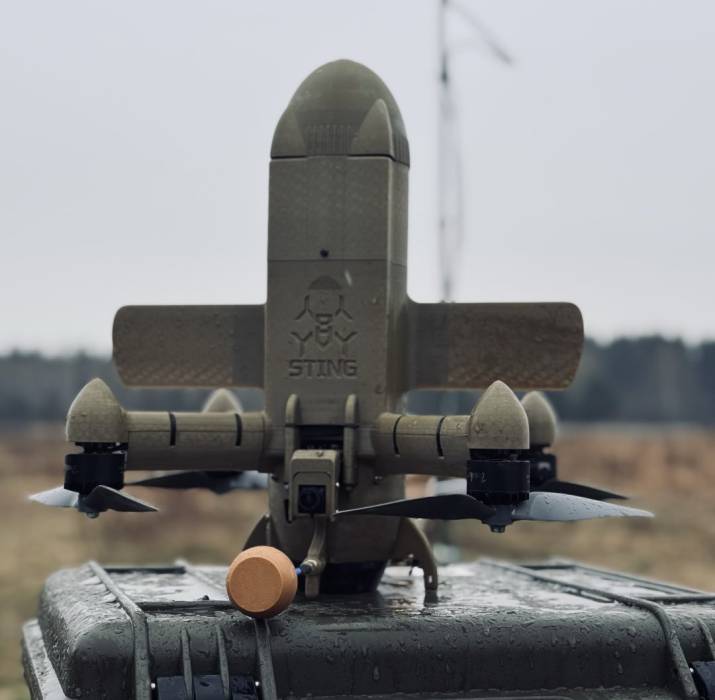
The face of modern warfare is changing rapidly, and the skies over Ukraine have become the primary testing ground for these new tactical approaches. Recently, a Ukrainian anti-aircraft missile regiment achieved something that would have seemed impossible just a few short years ago. In a single day of combat operations, the crews of this regiment managed to eliminate nineteen Russian Shahed assault drones.
|
http://buycoffee.to/przekazwiedzy You’ll motivate me to work harder and create better content. Thank you! |
What makes this specific achievement truly remarkable is not just the sheer number of enemy drones destroyed in such a short timeframe, but the specific weapon system used to take them down. The defenders did not rely on traditional, expensive anti-aircraft missiles or heavy radar-guided artillery. Instead, they utilized small, highly effective interceptor drones known as the STING. The STING interceptor is produced by a Ukrainian organization called Wild Hornets. This group has quickly grown from a grassroots initiative into one of the most important developers of unmanned aerial vehicles in the entire conflict. Designed specifically to hunt down and destroy incoming threats, the STING represents a massive shift in military economics and defense strategy. While a single Russian-operated Shahed drone is estimated to cost around fifty thousand dollars, a single STING interceptor costs between one thousand and two thousand five hundred dollars to manufacture. Furthermore, the interceptor can fly at speeds exceeding three hundred kilometers per hour, allowing it to easily catch up to its target during flight. By crashing directly into the enemy drone or by detonating a small explosive charge nearby, the STING successfully neutralizes the threat without forcing the military to waste million-dollar air defense missiles.
The high success rate of the STING system was highlighted once again in early April of twenty twenty-six, when Ukrainian operators set an impressive new world record. Using these exact interceptor drones, a Ukrainian pilot known by the military callsign "Hulk" managed to shoot down two Shahed drones from a staggering distance of five hundred kilometers away. This incredible operational range was made possible by a newly deployed technology called Hornet Vision Ctrl. This advanced system allows drone operators to control their interceptors from hundreds of kilometers away with extreme precision and stability. The successful combat testing of this technology means that drone crews can now protect much larger geographic areas of the front line. Instead of covering a radius of just twenty kilometers, a single team can now defend zones up to one hundred kilometers wide, drastically reducing the number of personnel needed to secure the sky. This remarkable level of innovation has not gone unnoticed by the rest of the world. Western military leaders and defense officials are paying very close attention to Ukraine's growing expertise in drone warfare. International news agencies have reported that the United States Pentagon has expressed direct interest in acquiring cheap, highly effective interceptor drones like the STING to protect its own military forces. The need for affordable drone defense has become even more urgent recently due to the ongoing conflict involving Iran in the Middle East. During that particular conflict, the United States and its regional allies had to fire highly expensive interceptor missiles simply to shoot down cheap incoming drones. It is an approach that many military experts view as financially unsustainable and tactically flawed in the long run.
Three to seven minutes — that’s how long it takes crews to take down a Shahed with interceptor STING 🚀
— Wild Hornets (@wilendhornets) April 13, 2026
Suspilne featured an interceptor drone crew that has already taken down nearly 30 targets.
More on their combat work — and how video game experience helps take down enemy… pic.twitter.com/I6Tm8tOJOA
In fact, Ukrainian President Volodymyr Zelenskyy recently stated to the press that Ukrainian military personnel actively participated in defensive operations in the Middle East. Using their domestic drone technology and extensive combat experience, Ukrainian experts successfully shot down Shahed-style drones abroad. This action proved that their defense systems work effectively outside of their home country and can be easily integrated into broader international security efforts to protect global allies. The story of the nineteen downed Shahed drones and the five hundred kilometer flight record clearly shows that the era of relying solely on heavy, expensive missile systems is slowly ending. The Wild Hornets group and the Ukrainian military have proven to the world that small, smart, and affordable machines can defend the skies just as effectively as traditional weapons. As military technology continues to develop and improve, the STING interceptor will likely serve as a global blueprint for future air defense networks. It serves as a clear reminder that in any modern conflict, technological innovation and strategic adaptability are just as important as overwhelming firepower. At the core of the STING's effectiveness is its raw speed and aerodynamic design. Unlike traditional, slow-moving quadcopters, the STING features a bullet-shaped, three-dimensional printed frame designed specifically to minimize air resistance. Recent performance trials conducted by the engineering group revealed that upgraded versions of the drone have broken their own speed records, accelerating past three hundred and fifteen kilometers per hour, with some prototypes reaching an astonishing three hundred and twenty-five kilometers per hour. This exceptional velocity is an absolute necessity on the modern battlefield. Russian forces have increasingly deployed jet-powered variants of their attack drones, such as the Geran-3, which can cruise at speeds exceeding three hundred kilometers per hour. By possessing a top speed that outpaces these jet-powered threats, the STING ensures that its operators can swiftly close the distance, catch the target from behind, and deliver a fatal blow before the enemy drone can reach its destination.
At the core of the STING's effectiveness is its raw speed and aerodynamic design. Unlike traditional, slow-moving quadcopters, the STING features a bullet-shaped, three-dimensional printed frame designed specifically to minimize air resistance. Recent performance trials conducted by the engineering group revealed that upgraded versions of the drone have broken their own speed records, accelerating past three hundred and fifteen kilometers per hour, with some prototypes reaching an astonishing three hundred and twenty-five kilometers per hour. This exceptional velocity is an absolute necessity on the modern battlefield. Russian forces have increasingly deployed jet-powered variants of their attack drones, such as the Geran-3, which can cruise at speeds exceeding 500 kilometers per hour (but for a short period of time). Furthermore, the STING possesses impressive altitude capabilities that allow it to hunt targets in a wide variety of atmospheric conditions. While its standard cruising altitude sits around three thousand meters, or ten thousand feet, the Wild Hornets group recently conducted trials in the Kherson region where a modified copter-type interceptor successfully reached an altitude of eleven kilometers. This high-altitude capability prevents enemy drones from simply flying higher to avoid interception. To locate targets in the vast emptiness of the sky, especially during nighttime raids, the STING is equipped with Kurbas thermal imaging cameras provided by Odd Systems. Once the operator, wearing virtual reality goggles, visually acquires the threat, an artificial intelligence-based guidance system can assist in the final seconds of the flight, ensuring a precise and devastating impact even against evasive maneuvers.
The sheer scale of the Wild Hornets' operation is equally as impressive as the drone's technical specifications. Recognizing that the war is largely a numbers game, the organization has drastically ramped up its manufacturing capabilities. As of early twenty twenty-six, the monthly production rate of STING interceptors has reportedly surpassed ten thousand units. This massive output has directly translated to unprecedented battlefield success. According to military statistics released earlier this year, STING operators have successfully destroyed over three thousand nine hundred enemy loitering munitions since the system's introduction. Naturally, the success and affordability of the STING have attracted intense international attention, particularly from nations in the Middle East facing similar threats from mass-produced attack drones. However, despite the lucrative potential of foreign contracts, the Ukrainian government currently strictly prohibits the export of these interceptors. The domestic demand remains too high, and every single drone produced is desperately needed on the front lines to protect local infrastructure and civilian centers. Representatives from the Wild Hornets have confirmed that they receive regular inquiries from foreign defense ministries, but for now, their exclusive priority remains the defense of their homeland.
SOURCES:
https://www.pravda.com.ua/eng/news/2026/04/04/8028757/
https://www.militarytimes.com/news/pentagon-congress/2026/03/11/these-are-ukraines-1000-interceptor-drones-the-pentagon-wants-to-buy/
https://www.clickondetroit.com/news/world/2026/04/10/zelenskyy-says-ukrainian-forces-shot-down-shahed-drones-in-middle-eastern-countries-during-iran-war/
https://thedefender.media/en/2026/03/sting-intercepted-rare-target/
https://www.cbsnews.com/news/us-ukraine-drone-defense-expertise-iran-war/
https://www.twz.com/news-features/ukrainian-companies-prohibited-from-exporting-shahed-interceptor-drones
https://www.pravda.com.ua/eng/news/2025/11/30/8009669/
https://united24media.com/latest-news/ukrainian-engineers-push-interceptor-drone-past-315-kmh-to-hunt-down-russian-uavs-11130
https://en.defence-ua.com/video/fpv_speed_revolution_wild_hornets_sting_anti_air_drone_accelerates_to_over_315_kmh-89.html
https://www.youtube.com/watch?v=Sw8OJC4S9Zg
 Polski (PL)
  English (United Kingdom)