
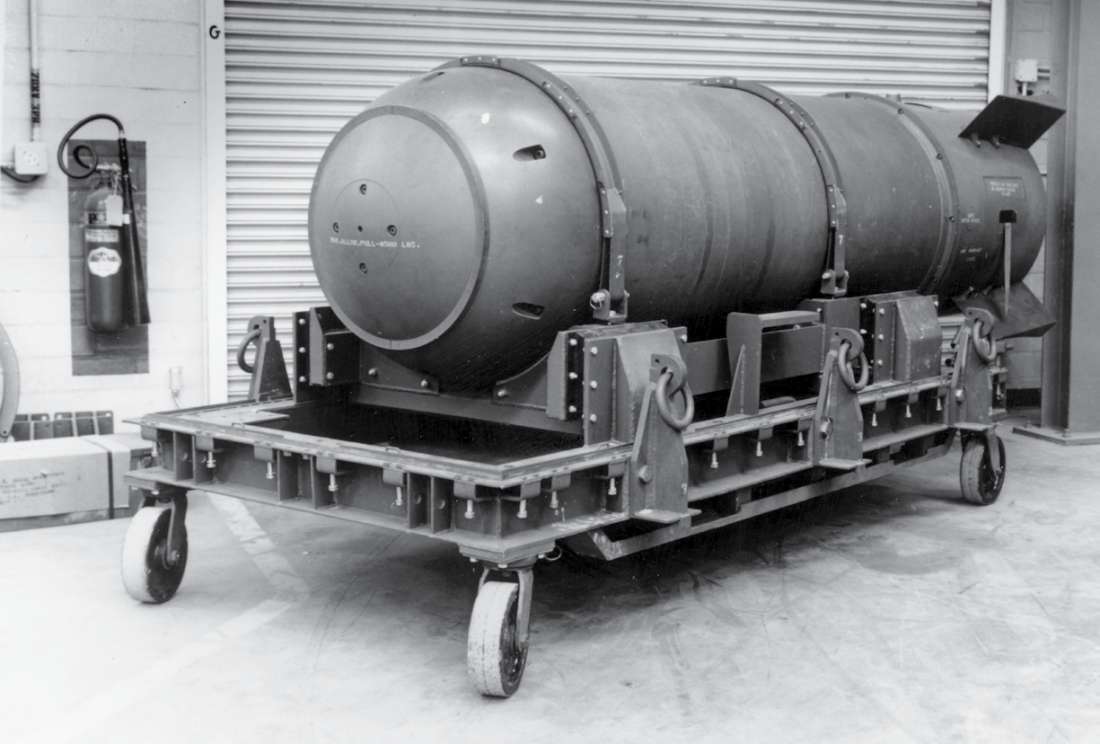
In the dark skies over the Atlantic Ocean, a routine military exercise turned into an emergency that would leave a lasting mark on American history. On the night of February 5, 1958, two United States Air Force planes collided high above the coast of Georgia. In the chaotic aftermath of the crash, a massive hydrogen bomb was dropped into the ocean. Today, decades later, that weapon remains missing. It lies hidden somewhere in the shallow, muddy waters off Tybee Island, keeping a Cold War secret that still sparks debate among historians and military experts.
|
http://buycoffee.to/przekazwiedzy You’ll motivate me to work harder and create better content. Thank you! |

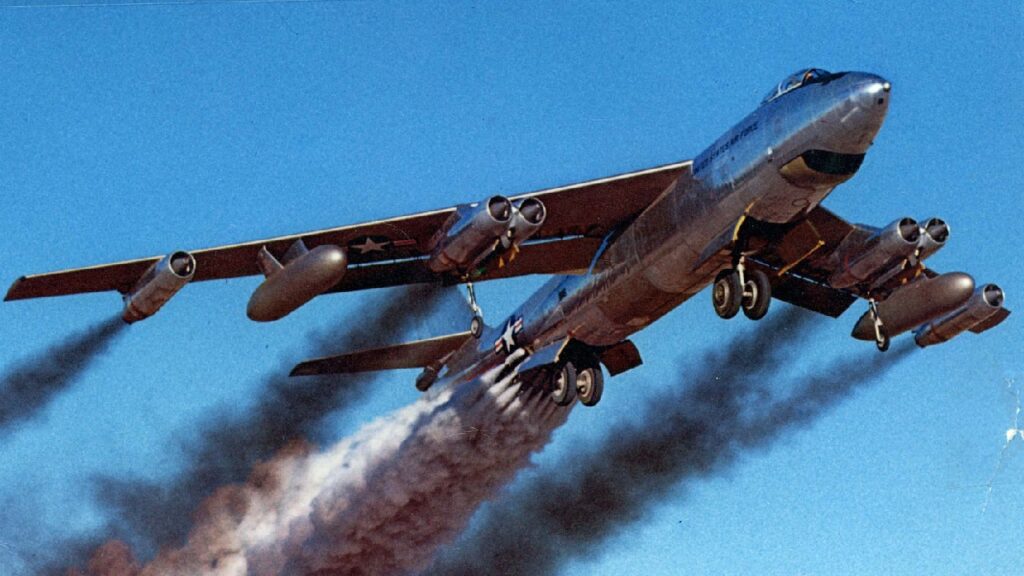
The incident began as a simulated combat mission. A large B-47 Stratojet bomber, piloted by Major Howard Richardson, was carrying a 7,600-pound Mark 15 thermonuclear bomb (3.8 megatons). At around two in the morning, an F-86 Sabre jet fighter, taking part in the same training exercise, failed to spot the larger bomber on its radar. The fighter crashed directly into the bomber. The pilot of the smaller jet, Lieutenant Clarence Stewart, was forced to eject and safely parachuted to the ground while his plane was completely destroyed. Major Richardson faced a much different struggle. His bomber was severely damaged, losing an engine and suffering massive harm to its wing and fuel tanks. The plane was plummeting toward the earth, but Richardson managed to regain control at an altitude of about 20,000 feet. He knew he had to land the crippled aircraft at the nearby Hunter Air Force Base outside of Savannah, Georgia. However, the heavy nuclear weapon in the belly of the plane posed a terrible risk. If the damaged bomber crashed upon landing, the heavy bomb could tear through the aircraft or cause the high explosives inside the weapon to detonate.
To save his crew and prevent a disaster on the ground, Richardson asked for and received permission to throw the weapon overboard. He flew out over the ocean and dropped the bomb from an altitude of 7,200 feet. The crew watched carefully, but there was no explosion when the heavy device hit the water. Freed from the enormous weight, Richardson was able to safely land the damaged B-47 bomber. He was later awarded a medal for his bravery and skill in saving the aircraft and his crew. Immediately after the incident, the military launched a massive search. For over two months, a team of Navy divers, explosive experts, and troops scoured the waters of Wassaw Sound. They used handheld sonar devices, dragged cables across the sea floor, and flew airships overhead hoping to spot a crater in the sand. Despite their best efforts, the search was called off on April 16, 1958. The bomb had simply vanished, swallowed by the thick mud and shifting sands of the sea floor. The military concluded that the weapon was likely buried under five to fifteen feet of heavy silt.
The disappearance of the bomb is only half of the story. The other half is a debate that has lasted for more than six decades. The question remains: how dangerous is the lost bomb? The answer depends on what was actually inside the weapon when it was dropped. A fully armed nuclear bomb requires a core made of a radioactive material, usually plutonium, to trigger a nuclear explosion. Following the accident, the Air Force quickly assured the public that the bomb was not fully armed. They stated that the plutonium core had been removed before the training flight and replaced with a heavy lead dummy. According to this official statement, the weapon could not cause a nuclear explosion, even though it still contained conventional explosives and some uranium. For many years, this explanation calmed the fears of local residents.
However, the story became complicated years later. In the 1990s, documents from a 1966 secret government meeting were finally made public. In those documents, a high-ranking official testified before Congress and referred to the Tybee Island weapon as a complete bomb containing a plutonium pit. This revelation shocked the public and started a wave of new questions. If the testimony was accurate, a fully capable nuclear weapon was sitting just a few miles from the beaches of a popular vacation town.
Despite the release of the 1966 document, military historians and modern experts largely agree with the original Air Force claim. They point out that keeping the nuclear core out of the bombs during training missions was strict standard procedure at the time. It is highly likely that the weapon was indeed unarmed. Still, the conflicting government documents ensure that a small cloud of doubt will always hang over the incident. Over the years, several private search teams and documentary filmmakers have tried to find the lost bomb, using modern technology to scan the ocean floor. Every attempt has failed to locate the massive metal casing. Some searchers reported finding high levels of radiation in the water, but scientists later proved that these readings were caused by natural minerals in the coastal sand, not a leaking bomb.
Today, the official policy of the United States government is to leave the bomb alone. Experts believe that the safest option is to let the weapon rest completely undisturbed in the deep mud. Even if the bomb is unarmed, it still contains hundreds of pounds of regular explosives. Trying to drag it out of the ocean floor could be incredibly dangerous. Furthermore, moving the device might crack its metal casing, which could cause harmful materials to leak into the surrounding water. As long as it stays buried, the thick mud acts as a natural shield. The story of the missing Tybee Island bomb serves as a chilling reminder of the tense days of the Cold War. It is a piece of history that is frozen in time, buried in the dark waters off the coast of Georgia. While the exact contents of the bomb might always remain a topic of debate, its presence beneath the waves is an undeniable truth. Until the day the ocean decides to give up its secrets, the lost bomb will remain one of the most fascinating military mysteries of the modern age.
SOURCES
https://en.wikipedia.org/wiki/Wassaw_Sound
https://www.snopes.com/fact-check/us-missing-nuclear-weapons/
https://armscontrolcenter.org/fact-sheet-the-missing-tybee-bomb/
https://en.wikipedia.org/wiki/1958_Tybee_Island_mid-air_collision
https://www.19fortyfive.com/2026/03/in-1958-a-u-s-bomber-dropped-a-nuclear-weapon-off-the-coast-of-georgia-68-years-later-the-pentagon-still-cant-find-it/
https://www.edn.com/tybee-bomb-is-lost-by-the-us-air-force-february-5-1958/
 Polski (PL)
  English (United Kingdom)