
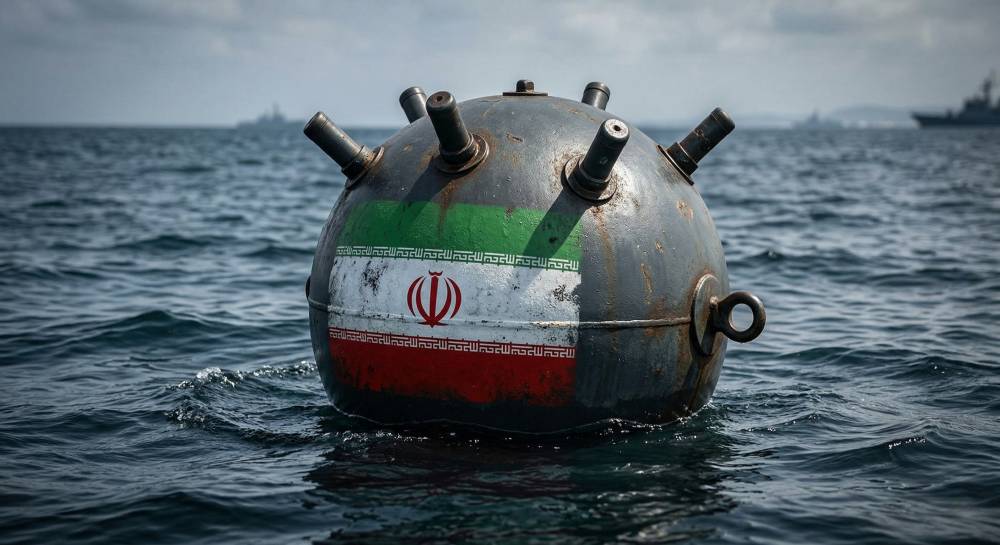
The global economy heavily relies on the uninterrupted flow of energy. The Strait of Hormuz, a narrow waterway connecting the Persian Gulf to the Gulf of Oman, is the most vital artery for this entire system. Historically, approximately twenty percent of the world's oil and liquefied natural gas passes through this specific chokepoint.
|
http://buycoffee.to/przekazwiedzy You’ll motivate me to work harder and create better content. Thank you! |

Recently, the region experienced a severe military conflict involving the United States, Israel, and Iran. During this period, the strait was effectively closed to regular commercial traffic. While a fragile ceasefire has been reached and diplomatic talks are currently underway, the waterway remains unable to handle its normal shipping capacity. The reason for this ongoing disruption is no longer just a matter of political negotiation or posturing. It is a severe technical problem: the waters are heavily mined, and the very forces that laid the explosives are now struggling to find them.
During the height of the recent hostilities, Iran employed a classic tactic of asymmetrical naval warfare. In an effort to deter its adversaries and exert extreme economic pressure on the global stage, Iran's Islamic Revolutionary Guard Corps deployed numerous small, fast boats to drop naval mines into the strait. The strategic goal was to make the passage too dangerous for commercial vessels, thereby halting the export of oil from allied Gulf nations and securing a powerful bargaining chip. The tactic achieved its immediate aim. The threat of hidden explosives beneath the surface, combined with the severe risk of drone and missile strikes, forced international shipping companies to suspend their operations. Tanker traffic plummeted, and hundreds of ships were forced to drop anchor outside the danger zone, leading to an immediate spike in global energy prices.
The situation has now shifted from active combat to the diplomatic arena. High-level negotiations are taking place in Islamabad, Pakistan, involving international delegations including United States Vice President JD Vance and Iranian officials. A key demand from the administration of United States President Donald Trump for maintaining the ceasefire is the complete, immediate, and safe reopening of the Strait of Hormuz. In response, Iranian Foreign Minister Abbas Araghchi publicly stated that the strait would remain open, but only with "due consideration of technical limitations." While this phrase might sound like standard diplomatic caution, defense experts and intelligence officials have confirmed that it reflects a stark and highly problematic operational reality. Iran cannot fully open the strait because it simply lacks the ability to make the water safe.
The deployment of the naval mines was reportedly executed in a rushed, disorganized, and haphazard manner. When the crews of the small vessels dropped the explosive devices into the water, they apparently failed to accurately record the precise geographical coordinates of every mine. This lack of proper mapping is a critical failure in the execution of mine warfare. Furthermore, the Strait of Hormuz is a dynamic maritime environment characterized by strong tidal currents. Even if the initial drop locations had been perfectly recorded by the Iranian military, many of the floating or tethered devices have likely drifted far from their original positions over the past weeks. The result is an unmapped, unpredictable, and highly lethal minefield blocking one of the busiest trade routes on Earth.
From a military perspective, laying sea mines is a relatively simple, fast, and inexpensive process. However, clearing them is the exact opposite. Mine removal is a slow, incredibly dangerous, and highly technical procedure that requires specialized vessels, advanced acoustic and magnetic sonar equipment, and highly trained disposal teams. According to defense officials, Iran does not possess the robust, large-scale mine-sweeping capabilities required to quickly secure a waterway of this massive size. Ironically, even the United States military, equipped with advanced maritime technology, relies on a limited number of specialized littoral combat ships for this specific task and would struggle to clear such a chaotic minefield rapidly.
Currently, the strait is operating under a highly restricted and anxious system. Iran has managed to establish a narrow, heavily controlled corridor, allowing certain ships to pass if they are willing to pay a substantial toll and follow strict navigational guidance from Iranian authorities. However, these supposed safe routes are severely limited and do not inspire any confidence among major international insurance firms or global shipping conglomerates. The financial and human risk of a massive commercial vessel or oil tanker striking a stray explosive is simply too great to ignore.
The unintended consequences of this defensive military operation are profound and far-reaching. What began as a deliberate strategic move to control a maritime chokepoint during a conflict has turned into a technical trap for the very nation that initiated it. Until the extensive and tedious process of locating and neutralizing these scattered weapons can be completed, the global energy market will remain heavily constrained. The situation demonstrates that in modern naval warfare, the crude tools used to block an adversary can easily become a permanent obstacle, paralyzing vital international trade routes long after the political will to fight has been paused.
SOURCES:
https://www.indiatoday.in/world/story/iran-lost-track-of-mines-it-planted-in-strait-of-hormuz-us-middle-east-war-2894654-2026-04-11
https://www.hindustantimes.com/world-news/iran-unable-to-locate-its-own-sea-mines-in-strait-of-hormuz-delaying-reopening-nyt-report-trump-usa-war-talks-islamabad-101775886917649.html
https://www.ynetnews.com/article/rjir7dwh11l
https://www.livemint.com/news/world/us-iran-war-update-why-is-tehran-unable-to-open-strait-of-hormuz-naval-mines-shipping-traffic-american-officials-11775897461366.html
https://www.dailysabah.com/world/mid-east/iran-unable-to-reopen-hormuz-due-to-missing-mines-report-says
https://www.aa.com.tr/en/middle-east/iran-faces-obstacles-reopening-strait-of-hormuz-due-to-missing-uncleared-mines-nyt/3901572
https://indianexpress.com/article/world/iran-strait-of-hormuz-mines-islamabad-peace-talks-us-jd-vance-10631161/
 Polski (PL)
  English (United Kingdom)